
Buying guides · 4 min read
AI voice cloning tools: ElevenLabs or Descript?
Choose between dedicated speech generation and voice tools inside an editor. Compare current plans, verification requirements and practical listening tests.
Affiliate disclosure: Some links may earn CreatorStack a commission at no extra cost to you.
At a glance
Use ElevenLabs for a dedicated narration workflow and consider Descript for voice edits within an existing production. Test pronunciation and follow the selected cloning feature’s verification rules.
Choose by where the voice will be used
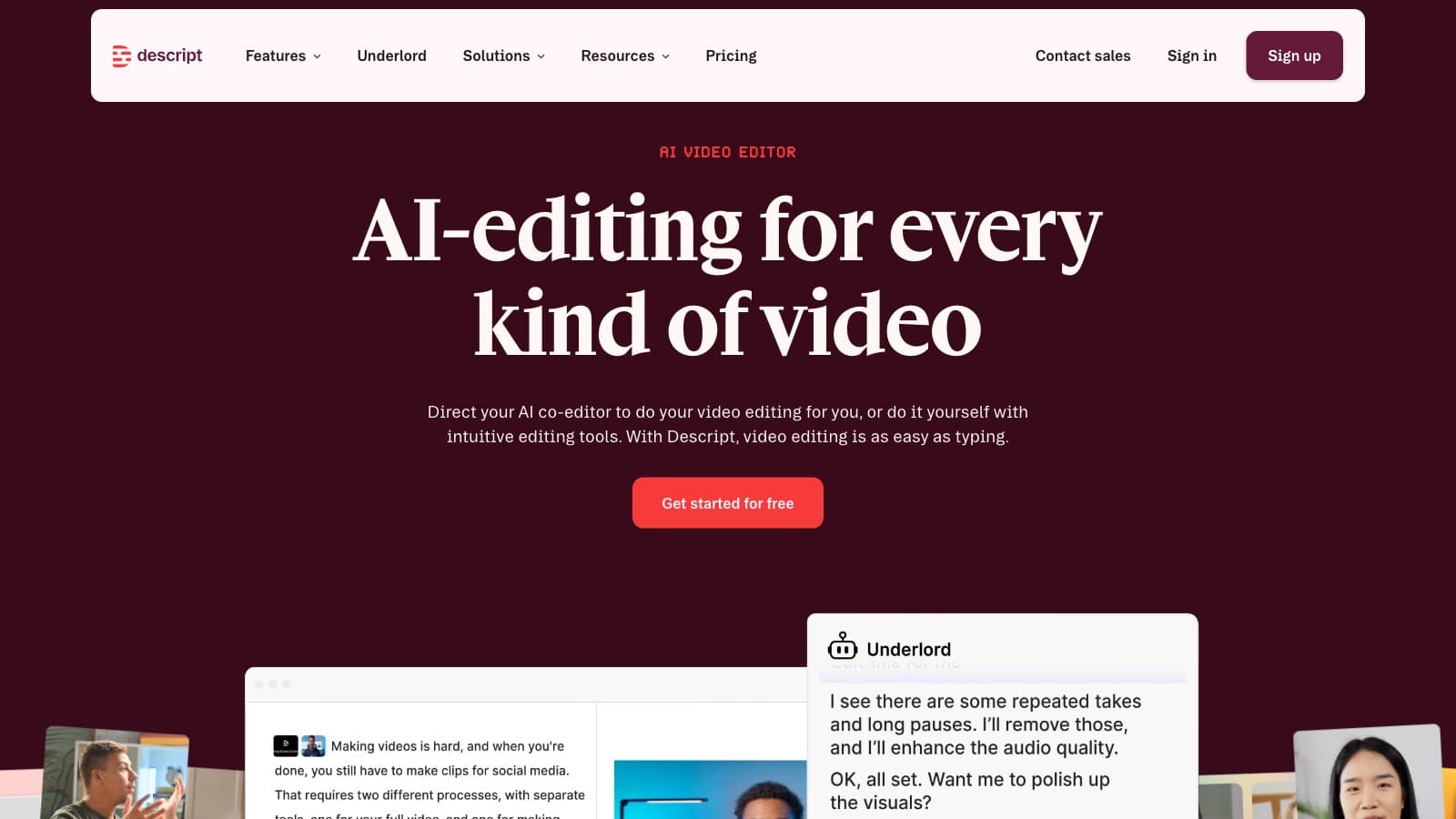
ElevenLabs is a candidate for a dedicated speech-generation workflow. Descript is a candidate when voice corrections belong inside a podcast or video edit. This distinction is more useful than an unsupported claim that one always sounds more human.
What the current sources establish
ElevenLabs Starter includes Instant Voice Cloning; Creator includes Professional Voice Cloning. Creator's advertised first-month discount is not its recurring price. Descript lists custom AI voices and Regenerate alongside editing features. ElevenLabs plans; Descript plans.
| Your task | Candidate | Test before committing |
|---|---|---|
| Narration created from an approved script | ElevenLabs | Pronunciation and pacing on your real script |
| Repairing a line inside an existing edit | Descript | Whether the replacement blends into the surrounding recording |
| Another person's verified professional voice | Follow the provider's authorised sharing route | Account ownership, verification and permission |
Instant and professional cloning have different rules
ElevenLabs' Instant Voice Cloning documentation asks for rights and consent. Its Professional Voice Cloning policy is stricter: you can create a professional clone only of your own voice. Another person needs to create and verify their own clone before sharing it through the authorised process. Consent alone does not remove that product restriction. Instant guide; professional clone policy.
Shortlist for a monthly narration series
Imagine a creator publishing four five-minute explainers in their own voice. They already have a video editor, a quiet place to record and a list of recurring product names. The goal is consistent narration with occasional script corrections. This is an illustrative buying decision.
Start with a recorded sample as the baseline. If the creator can comfortably record all twenty finished minutes and fix mistakes, cloning may add more setup than it removes. Keep that option on the shortlist; the cheapest adequate workflow can be the microphone already on the desk.
ElevenLabs belongs on the shortlist when creating whole passages of new speech is the recurring job. Compare Instant and Professional cloning on their actual requirements before choosing a tier. A professional clone of another speaker requires that speaker's own verification process; paying for Creator does not let a producer bypass it.
Descript belongs on the shortlist when the narration is part of an edit that already lives there. Its value is hearing a repaired line in context and continuing the project. Reject a second Descript subscription if the creator intends to keep every edit elsewhere and only needs exported narration. Conversely, reject an extra ElevenLabs subscription if the editor's existing speech tools handle the actual corrections satisfactorily.
Listen to the revision, not only the first render
Use a passage that says a product name, a date and a question. Then change the date and listen across the replacement. Check that the emotional emphasis still belongs on the intended word. A voice can sound plausible while making a neutral instruction sound sarcastic or placing a pause inside a name.
Keep a pronunciation list beside the approved script. Generate or record in sections that can be replaced without rebuilding the whole programme. If one word refuses to blend, try replacing the complete sentence; repeated tiny patches can make the rhythm worse.
The sample passes when the creator recognizes the intended delivery, all names and numbers are correct, and the revised passage blends on headphones and a phone speaker. Ask another listener to identify awkward joins without telling them where the correction occurred. This is a suggested listening exercise, not a measured fidelity score.
Budget the work you actually generate
Twenty finished minutes per month does not mean twenty minutes of chargeable generation. The first pass, alternate delivery and corrected sections can all add work, and providers meter models differently. Record the actual consumption for one five-minute explainer and its revision before multiplying by four.
Upgrade when a verified feature or repeated capacity limit blocks that workflow. If the main problem is noisy source material or an awkward script, improve the input first. Subscription size cannot establish a natural result.
Final recommendation
Start with the tool closest to the job you already do. Avoid adding a separate voice subscription if the editor you use can meet your correction needs. Add dedicated generation when your narration requirements justify it.
Read the ElevenLabs vs Descript comparison or follow our own-voice podcast guide.
Common questions
Questions people ask.
- Can I professionally clone a client with consent?
- ElevenLabs requires the speaker to create and verify their own Professional Voice Clone; consent does not let you create it in their place.
- Does a paid plan guarantee natural speech?
- No. Evaluate the model, sample quality and actual script. Pricing documentation is not evidence of listener preference.
Sources & freshness
This article was refreshed on 29 Sept 2026 using the sources below. A source check verifies published information, not output quality or checkout availability in every region.
- elevenlabs.io/pricing
- www.descript.com/pricing
- elevenlabs.io/docs/eleven-creative/voices/voice-cloning/instant-voice-cloning
- help.elevenlabs.io/hc/en-us/articles/36842751624209-Can-I-create-a-Professional-Voice-Clone-of-someone-else-s-voice
What changed: Added a worked production decision, acceptance criteria and reasons to reject or change the shortlisted tool.
Descript
Research recorded: 29 Sept 2026
Found a correction? Let us know.